The MNT token is used within the Mantle network to pay transaction fees, participate in governance, and power ecosystem incentives. It serves as the core asset connecting user activity with system operations.
2026-04-24 08:29:13
The core distinction lies in architectural philosophy. Mantle separates execution and data layers through a modular design, while Optimism operates on a more integrated, monolithic Rollup structure.
2026-04-24 08:19:16
Mantle processes transactions on Layer2 through a Rollup mechanism and ultimately settles them on Ethereum, striking a balance between low costs and high security.
2026-04-24 08:15:08
Mantle is an Ethereum Layer2 network built on a modular architecture. By separating execution, data availability, and settlement layers, it achieves greater scalability and lower costs.
2026-04-24 08:03:23
SOON uses an SVM Rollup architecture to separate transaction execution, state updates, and On-Chain settlement, enabling a high performance pipeline from user input to final confirmation.
2026-04-22 08:56:53
The SOON token is the core asset of the execution layer network. It is used to pay transaction fees, support staking based security, participate in governance, and drive ecosystem incentives. Its structured allocation and inflation model help sustain long term network operation.
2026-04-22 08:51:31
SOON is an execution layer network built on an SVM Rollup architecture. By bringing the Solana execution environment into modular blockchains, it aims to deliver high performance computation and coordination across different ecosystems.
2026-04-22 06:45:28
The monolithic blockchain is the first way to build a blockchain, but scalability issues have led to the emergence of modular blockchains. This article compares modular blockchains with monolithic blockchains, helping you understand the advantages and disadvantages of both types of blockchains.
2026-04-07 20:01:32
Why are modular blockchains increasingly being brought to the forefront? What exactly does modular blockchain mean? This article will explore the new trend in blockchain—modular narratives. It will look at the challenges faced by Ethereum, compare modular blockchains to monolithic blockchains, and anticipate the impact of modular blockchains on the overall blockchain architecture and its use.
2026-04-07 15:22:50
EigenDA is a RaaS market that provides acceleration services, reducing the barriers to Rollup deployment. It is a data availability network designed to enhance the throughput and reduce the cost of Rollup protocols. This article will uncover the process of deploying Rollup using EigenDA.
2026-04-07 13:15:07
The article details AltLayer, a decentralized resilient Rollup-as-a-Service (RaaS) protocol designed to provide a scalable second-layer solution to alleviate on-chain congestion and costly transactions cost. AltLayer utilizes the modular concept and restaking mechanism to enhance security, decentralization and processing speed. It provides Rollup services, allowing users to quickly create customized Rollups, supporting multi-chain and multi-virtual machine functions. AltLayer's core technologies include Restaked Rollup and RaaS, the latter of which simplifies the deployment of Rollup through a code-free interface. In addition, AltLayer issued the native token ALT, which is used to pay for fees, governance and consensus mechanisms within the ecosystem. The article also discusses AltLayer's team background, financing situation, and opportunities and challenges it faces.
2026-04-07 12:43:15
This article discusses the execution layer and the settlement layer, with Ethereum continuing to support rollups. However, new execution layers and more rollup service providers may bring higher throughput, security, and innovation. Interoperability is also essential, with some protocols in development aiming to ultimately achieve a world with over 100,000 chains, driving the blockchain industry towards genuine adoption.
2026-04-07 12:08:51
In the blockchain field, a series of competitive decentralized data availability (DA) projects have emerged, including Celestia, EigenLayer, Avail DA, and NEAR DA. These projects aim to enhance blockchain scalability, data availability, and performance by employing different technologies and approaches. This article compares and analyzes these DA projects, discussing their technical characteristics and competitive advantages in the market.
2026-04-07 11:29:06
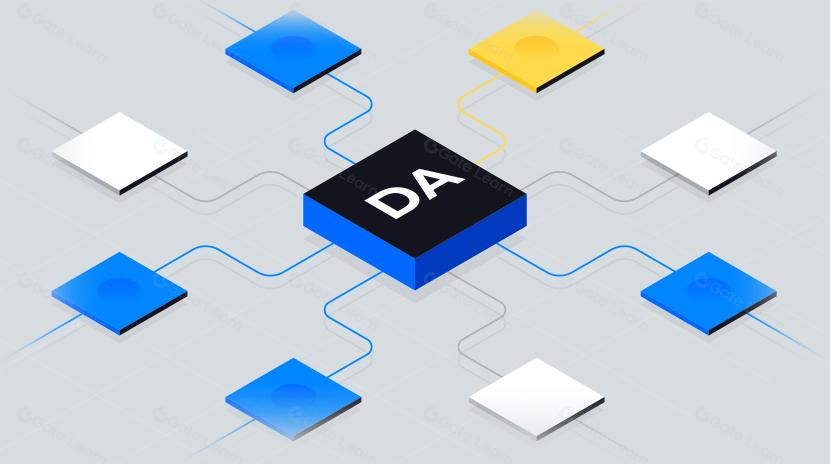
The Data Availability Layer plays a crucial role in modular architecture, becoming one of the most popular fields in 2024. Ethereum's Data Availability (DA) became a hot topic, triggering broad discussions about projects such as Celestia, EigenLayer, Avail, and NearDA. This article will delve into the technical architecture, consensus mechanisms, and other aspects of key participants Celestia and EigenDA to reveal the competitive landscape of the DA track.
2026-04-07 11:27:54
Innovation on layer-1 platforms is heating up, with Bitcoin and Ethereum evolving into more versatile platforms. Ethereum is moving towards a modular architecture, and new first-layer blockchains like Aptos are emerging. This article will explore the diversified prospects of first-layer blockchain networks and understand their impact on the broader crypto ecosystem.
2026-04-07 11:08:00